(This story was originally written and recorded for Retrocast 43, released on July 9, 2026.)
I’ve never told anyone this, but I am a descendant of the infamous Silverman crime family. My family’s life of crime began during the Great Depression, when times were tight. My dad’s parents were notorious thieves, and I didn’t realize until I was older just how good they were at it. Yet, from the day I was born, the proof had been staring me right in the face.
Every time I went to their house and had a meal with them, I was completely unaware that every single packet of salt, pepper, and sugar that they had ever placed on the table had been taken from some restaurant somewhere. The same thing was true about the napkins. I would venture a guess that it was their thievery that was, in part, responsible for sugar reaching its highest cost per pound ever back in 1980.
And I have spent my entire life trying to outrun their criminal past. Anyone who enters my home can be certain that I have purchased all of the salt, pepper, sugar, and napkins that my wife and I use.
Of course, I am just joking around here. While it is true that my grandparents did have all those things on their kitchen table, the reality was that they had struggled through periods of financial hardship, and that’s where they picked up the habit of taking those extra things while dining at restaurants.
Now imagine growing up as the son of one of America’s most infamous gangsters: Al Capone, the Chicago crime boss widely believed to have orchestrated the notorious February 1929 St. Valentine’s Day Massacre.
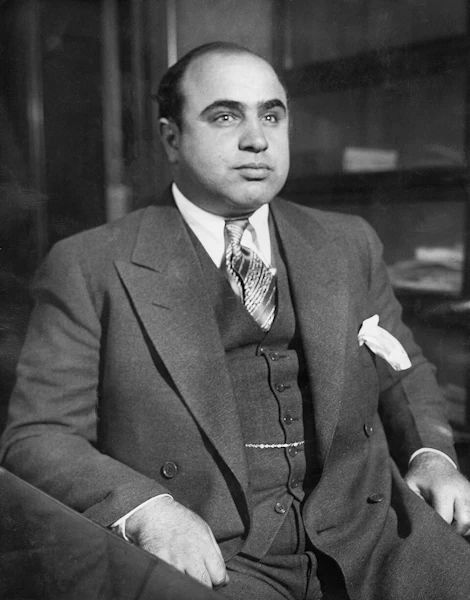
As if that weren’t enough, Capone gave his only child the very same name: Alphonse Albert Francis Capone Jr. —Al Capone Jr.—although his father simply called him “Sonny.”
It would have been easy for the younger Capone to follow in his father’s criminal footsteps, but he chose a different path. He wanted to live an honest, respectable life. Unfortunately, escaping his family name would prove nearly impossible.
Sonny attended the prestigious St. Patrick School in Miami Beach, Florida, where one of his classmates was Desi Arnaz. Years later, Arnaz and his future wife, Lucille Ball, would create the hit television series I Love Lucy and establish Desilu Productions.
After graduating, Sonny studied at the University of Notre Dame before completing his education at the University of Miami in 1937.
He spent much of his adult life taking ordinary jobs. At one point, he worked as a used car salesman but resigned after discovering that his employer had been rolling back vehicle odometers. He also worked alongside his mother in a restaurant, apprenticed as a printer, and even distributed tires. In every way he could, Sonny tried to build a quiet, humble life.
Yet no matter how hard he tried, he could never escape being Al Capone’s son.
That reality came crashing back into his life on two notable occasions.
The first was in 1959, when Desilu Productions premiered the hit television series The Untouchables, dramatizing Eliot Ness’s efforts to dismantle Al Capone’s Chicago bootlegging empire. Sonny and his mother were outraged by what they considered an unfair portrayal of Capone, who had died twelve years earlier.
To make matters worse, the series was being produced by Sonny’s old school friend, Desi Arnaz, whom he had not seen in years. Claiming the publicity would bring unwanted attention to his mother and his four daughters – who had never been told about their grandfather’s criminal past – Sonny filed a multimillion-dollar lawsuit against Desilu Productions. The case was unsuccessful.
The second incident was far less dramatic but equally damaging. Sonny was arrested for stealing $3.50 worth of merchandise from a grocery store—about $37 in today’s money. After his conviction, newspapers eagerly drew comparisons between his petty theft and the far more notorious crimes of his father, thrusting him back into the unwanted spotlight.
The stigma finally became too much to bear. On Thursday, April 7, 1966, Sonny appeared in a Fort Lauderdale courtroom and petitioned to legally drop the surname Capone. His request was granted, and for the rest of his life he lived under a different name.
Nearly four decades later, on July 8, 2004, an 85-year-old man named Albert Francis Brown died in Auburn Lake Trails, California. Aside from his third wife and his four daughters, it’s doubtful that anyone there knew they were mourning the only son of Al Capone.





.jpg)